Impostor syndrome
Adapted from Wikipedia under CC BY-SA 4.0. Contributor history · Source revision 1380242797. This deck is adapted and shared under the same license.
Read the original article →

Slide text
Impostor syndrome
Swipe →
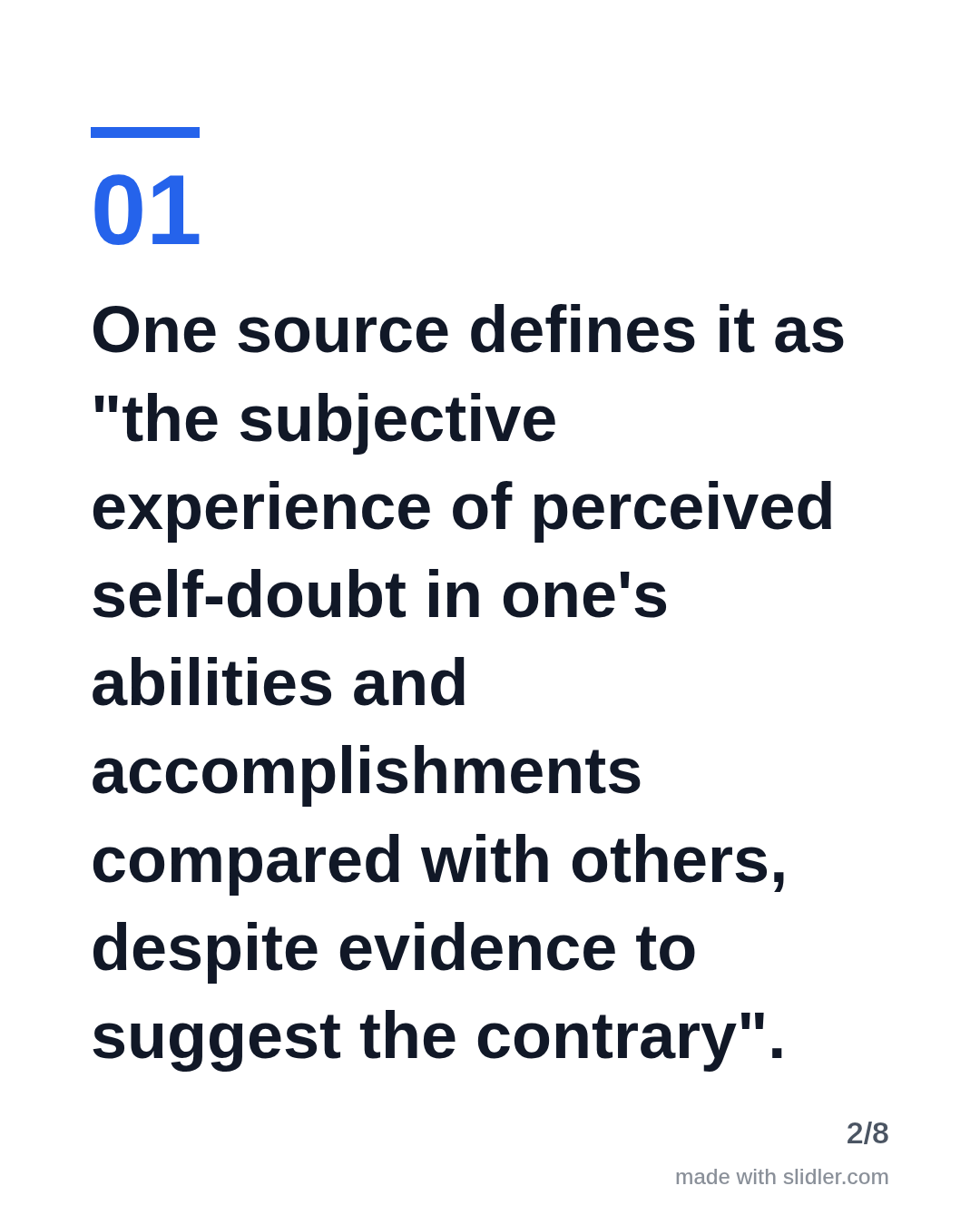
One source defines it as "the subjective experience of perceived self-doubt in one's abilities and accomplishments compared with others, despite evidence to suggest the contrary".
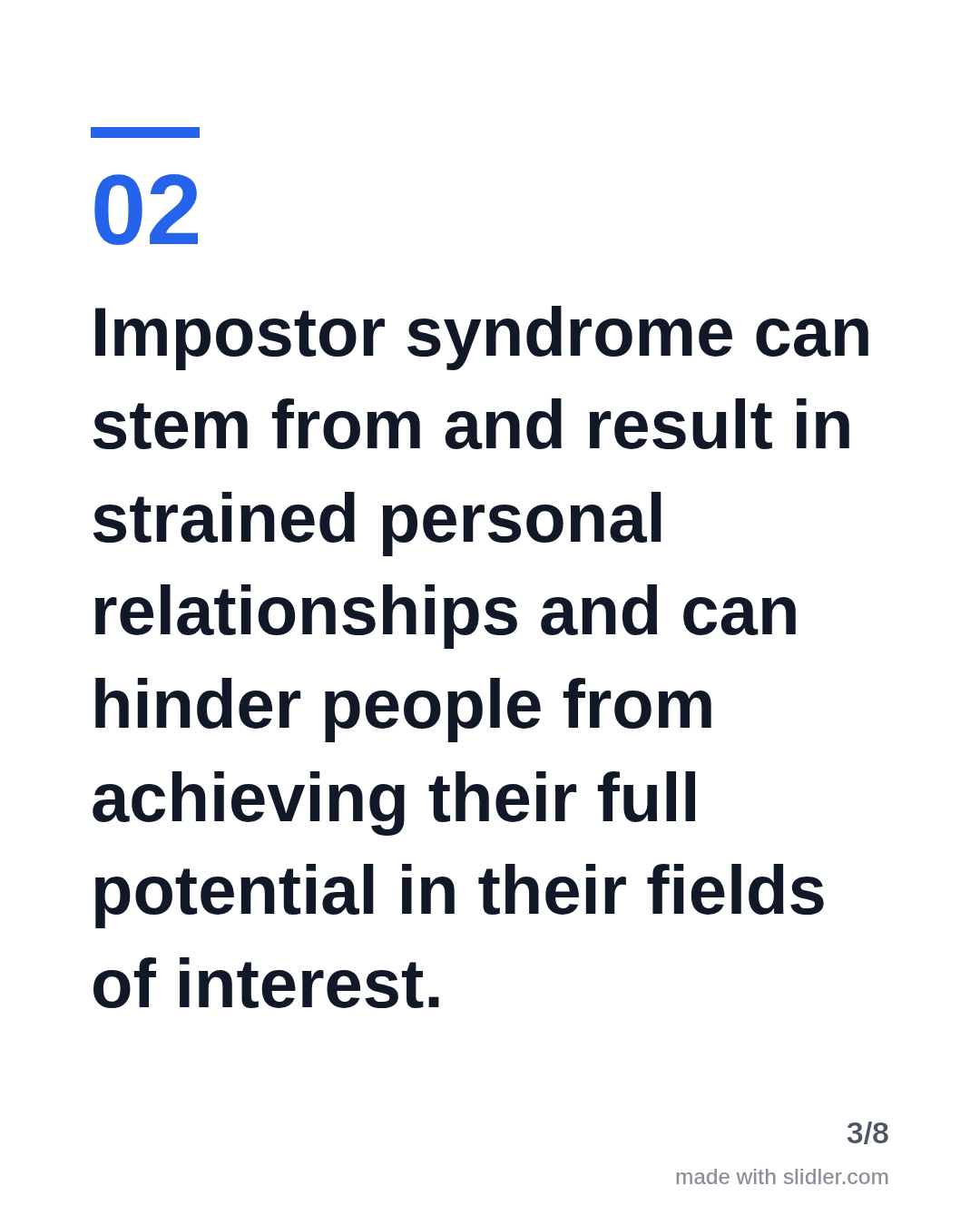
Impostor syndrome can stem from and result in strained personal relationships and can hinder people from achieving their full potential in their fields of interest.
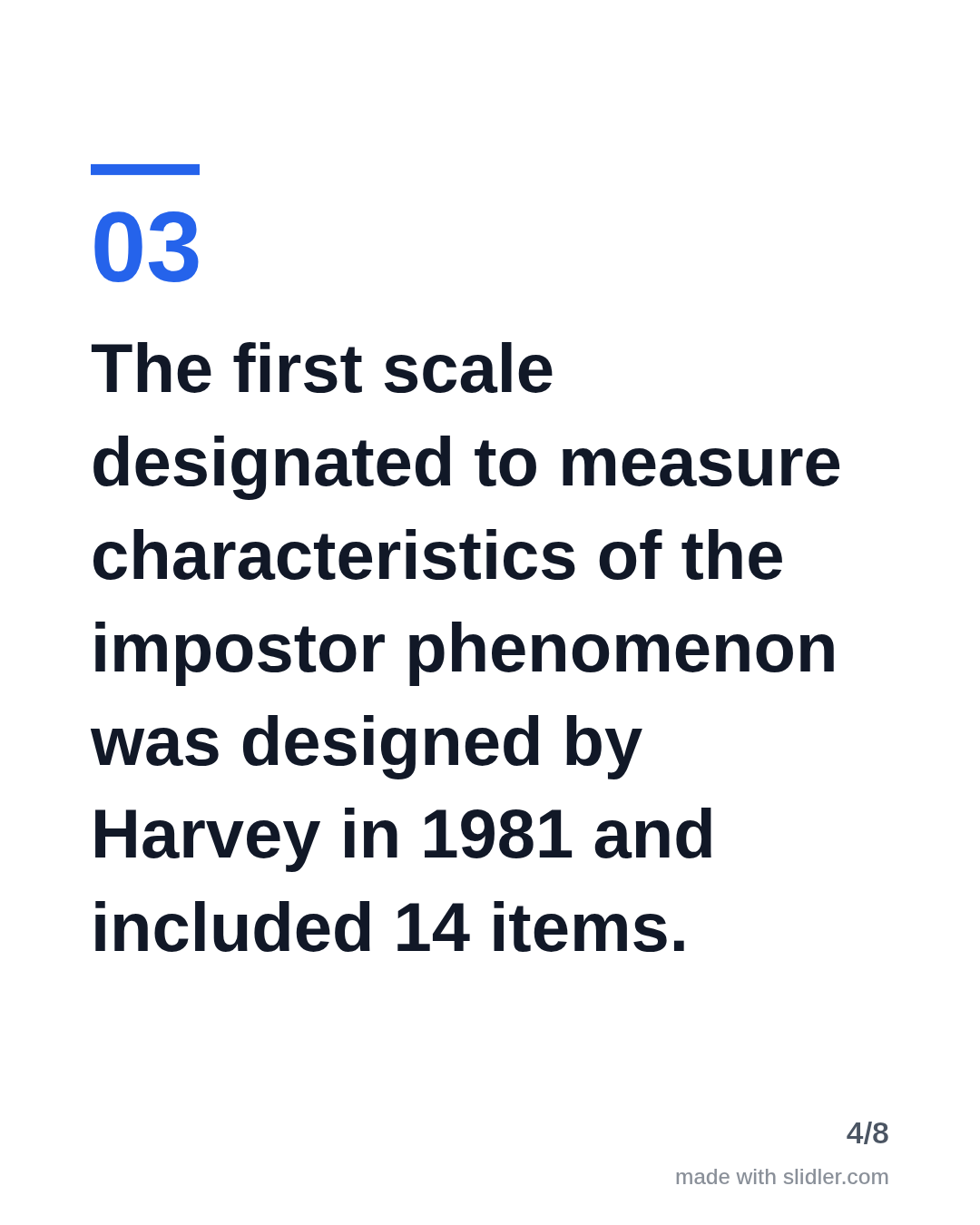
The first scale designated to measure characteristics of the impostor phenomenon was designed by Harvey in 1981 and included 14 items.
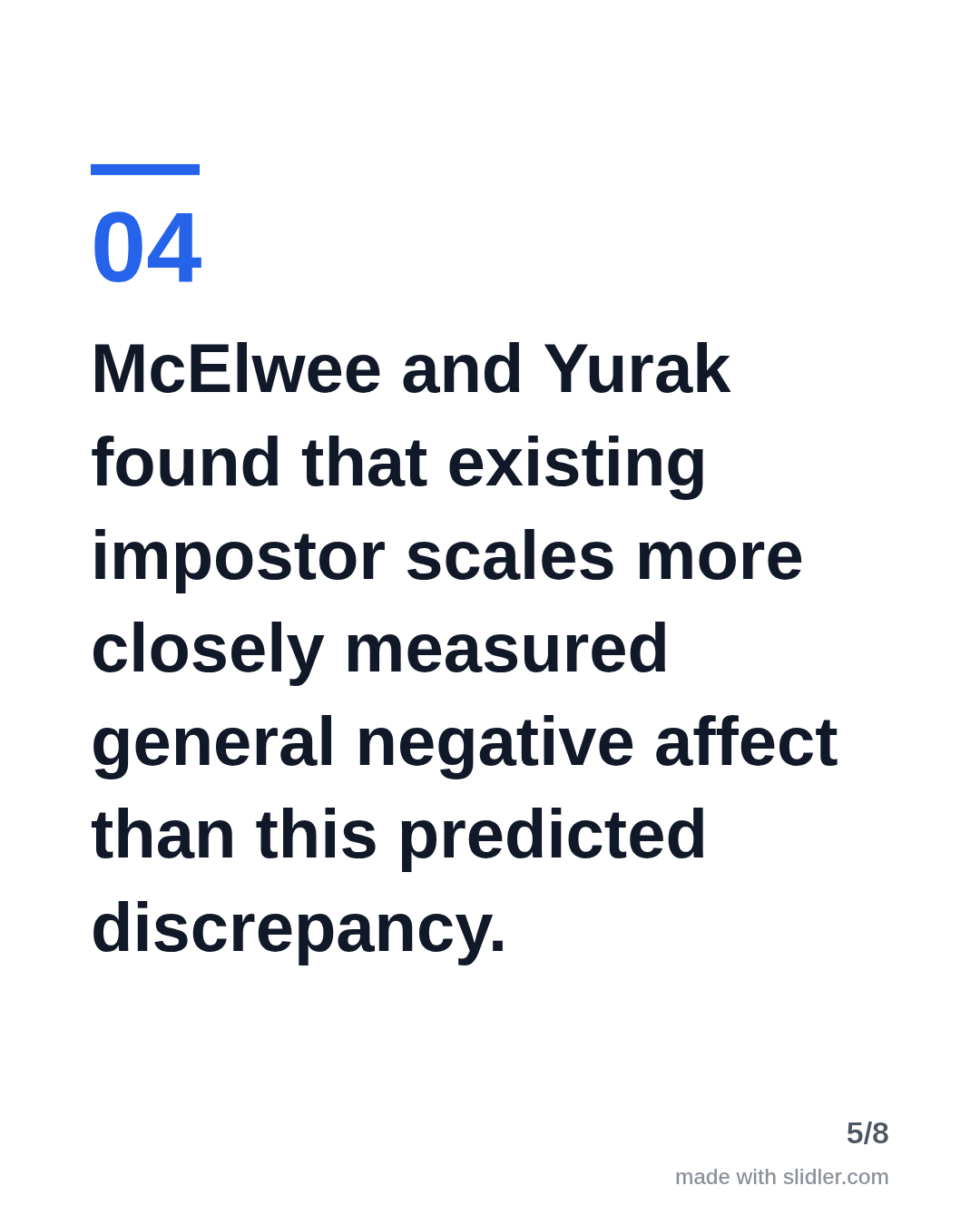
McElwee and Yurak found that existing impostor scales more closely measured general negative affect than this predicted discrepancy.
Helping others reject impostor beliefs by reflecting to them their values, abilities, and talents.
Impostor syndrome prevalence rates range considerably from 9 to 82%, depending on the screening method and threshold used.
Found this useful?
Follow for more, and save this post.